Highlighting Kendall Miller
A couple of weeks ago, I kicked off this series where I highlight someone in my network who's really good at the things our app helps you do. Dan Moore was my first interview (what a great interview that was). As I do these interviews, my theory is holding true: there's an intentionality behind what makes these connectors look so natural, whether it's birthed from a deep-rooted value or simply a discipline that drives them to kindness and connection.
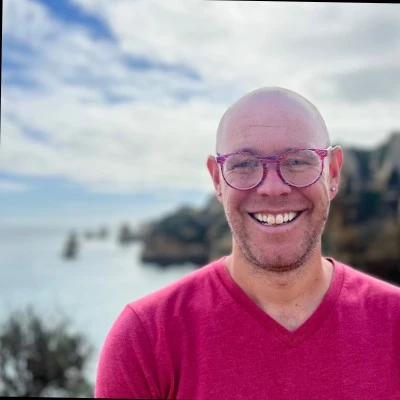
Today, I'm highlighting Kendall Miller, the self-proclaimed "bubbly-extrovert" of the Colorado Front Range startup scene. He is the founder and CEO of Maybe Don't, AI, a tool that provides guardrails and observability for agentic AI. He's also the owner of every developer's favorite whiskey, Friday Deployment, as well as the co-founder of the ever popular CTO Lunches.
Kendall is busy! So when I asked him to do this interview, I was half-thinking that it might've been too big of an ask. But because Kendall has such a big heart, he made it work. Kendall is always finding ways to give within the restrictions of his busy schedule. I'm inspired by that and have a lot to learn from him. So without further ado, let's read about what he does to stay intentional about his professional relationships.
On Connection
Annie: You're a natural connector and someone who makes others feel seen and heard. What's one thing that comes naturally to you and one thing that you have to work hard at to make this happen?
Kendall: I’m at my absolute most comfortable in a massive room full of people. I’m happy to work the room all night, talk to everyone, and I’m reasonably good at remembering faces. People energize me, and I genuinely care about making them feel seen. That part is easy. What’s difficult—the part I actually hate—is the "ops" of it all. Organizing the date, the time, and the place to get everyone together is the hard work for me.
Annie: Reciprocity doesn't always look like an apples to apples trade in every relationship. What does reciprocity look like in your most valuable professional relationships?
Kendall: You can’t ever expect reciprocity in networking. If you see every relationship as transactional, no relationship will ever be truly valuable. People are fascinating; if you show genuine interest and invest in them, it usually comes back to help you eventually—and by "usually," I mean very rarely! But even then, it’s valuable. Occasionally (rarely) you meet the two-dimensional, "no personality" people and that’s really hard to make work no matter who you are. But that is rare, most people will open up with some prodding.
Annie: Do you have any rituals or habits for staying connected to people who stretch your thinking?
Kendall: I don't have formal rituals. When I think of someone, I just send them a message—even if it’s been years. I’ll tell them I’m thinking of them and give a brief update. I generally avoid social media; knowing what people from junior high are up to isn't valuable to me. For me, everything "meatspace" is what matters most.
Align
Annie: Do you have 2-3 people who advocate for you when you're not in the room? How did those relationships develop?
Kendall: I’m not actually sure if people advocate for me when I’m not in the room. My focus is simply being the kind of person who deserves to be advocated for, whether it actually happens or not. I recognize that I say this from a position of privilege as a wealthy white man, but focusing on being someone I’m pleased with is what matters most to me.
Annie: Do you have a practice for staying connected to what senior leaders actually care about, rather than what you assume they care about?
Kendall: I don't have a conscious practice for this. It goes back to being genuinely interested in people. Senior leaders are usually happy to talk about their work, and I can almost always find something to "nerd out" about with them. If I actually care, I’ll remember the conversation. If I try to fake it, I’ll forget whatever we’ve talked about. There’s no reason to fake interest.
Partner
Annie: How have peer relationships changed how you think, not just what you know?
Kendall: I find out what I think by talking to other people. I don’t see a formal therapist, but I tell everyone I know everything I’m wrestling with. Introspecting through conversation is how I find clarity; often, a friend will say something back to me that reveals a piece I didn't see. Just recently, a friend pressed me on a big decision and drew out three points I hadn't considered. I then take those points to three or four more people to keep learning what I’m thinking and why.
Annie: Sometimes we can be pretty siloed from our own teammates because we're off in our own. What does collaboration look like with them?
Kendall: I stay out of silos by talking to everyone across the organization to get context. I need the big picture to do my job effectively. I look for the key people who understand how the whole machine works—the "why can’t we do this?" and "why haven't we ever done that?" people—rather than just those focused on their own department or what’s right in front of them.
Guide
Annie: You don't have to be a manager to guide someone. Is there anyone that looks to you for guidance and leadership? If so, what do they do that makes you proud?
Kendall: I give a lot of advice, but it’s rarely a one-way street. Even when I’m managing someone, I’m going to them for advice. The moment you have an agenda, people stop turning to you. My goal is for my only agenda to be tuning into their needs and giving selfless, thoughtful feedback.
Annie: How do you approach relationships where you're clearly the one teaching vs. the one learning?
Kendall: It is always easier to learn from a humble teacher. If someone thinks they’ve seen it all, they’re the least interesting person in the room. I once worked with a CEO who said, "The only thing I know for sure is that everything is different everywhere I go, so I’m going to lean on you." I hope that when I’m in a position of teaching, I approach it with that same humility.
Network
Annie: What's your favorite thing to do to meet up with your broader network, the folks with whom you share values and are generally fans of each other?
Kendall: Since high school, I’ve been the person who invites everyone to everything. I love feeling included, so I love making others feel included. My favorite thing is having all my "favorite people" in one room, but I have a LOT of favorite people. Just yesterday, I brought two extra people to a work lunch just so we could order more food (it was family-style). Everyone was excited to meet new interesting people and to have more to eat.
Annie: Has your approach to professional relationships evolved over time? If so, how?
Kendall: I think I’ve thought about these things the same way since the beginning, but the one thing that has evolved is my thinking on how people change when they obtain power. I’ve seen wonderful people turn into assholes when they get power. My highest value is to take care of people along the way and not turn into an asshole. If I get to the end of my career and I’ve avoided that trap—even if it means I have had smaller titles or less "success"—I will be thrilled.
What stands out in this conversation is how much of Kendall's approach comes down to simply creating the kind of culture around him that he wants to be part of and making sure everyone's invited. That's exactly the idea behind People Work: it's not about what's in it for you; it's about creating the kind of culture you want to work in and hoping others do, too.
Be sure to follow Kendall online: